

Used tow trucks
Buying a used wrecker to fill in for your main tow truck that just broke down this morning? Here’s how to figure out which used wrecker you should shop for first.
Let’s say your main wrecker breaks down this Monday morning. You’ve got calls coming in left and right that need to be dispatched to somebody. That wrecker sitting in the shop isn’t going to help get that SUV off the shoulder of the road or out of the apartment complex parking lot, is it? So what kind of replacement wrecker should you shop for first?
Match the Truck to Missed Calls
Start with the types of tows you’re turning away. If your main tow truck just went down, chances are good you’ve got some tows you’re not able to accept at this point. Don’t worry about paint condition, extra features, or even mileage just yet, what kind of tows are you turning down? This should be the first step in determining what kind of tow truck you should shop for first. Here are a few examples:
- Rollbacks – great for picking up disabled SUVs, AWD vehicles, cars with low ground clearance, and tow-away service after accidents
- Wheel-lift tow trucks – handy for quick moves, private property tows, and getting in and out of tight parking lots/apartment complexes
- Medium-duty wrecker – ideal for picking up delivery trucks/vans and other commercial fleet vehicles as well as heavier-duty local towing
Keep in mind if you’re looking to fill in for highway/interstate tows (i.e. I-20, I-55, etc) how the truck tows/drives is just as important as its rated capacity. Just because it tracks straight and true without a load doesn’t mean it’s going to perform the same once it has weight on the back end.
Hopefully this helps smaller Jackson towing companies figure out which used wrecker they should start their search with!
When Does a Rollback Make Sense?
Rollbacks are a popular choice as a fill-in tow truck for good reason. They’re extremely versatile and can be used to pick up practically any kind of disabled passenger vehicle – especially if it’s not able to be towed off using its drive wheels (broken wheels, AWD vehicles (I bookmarked wired.com/story/whats-the-difference-between-all-wheel-drive-and-four-wheel-drive for this), etc).
Just make sure the rollback deck is long enough to handle the kinds of vehicles you typically pick up. And don’t forget to test out all the rollback features (bed locks, winch cable, tilt/slide, etc) to make sure everything’s in working order – especially under load. Mississippi summers can put on extra stress on hydraulic systems (and cooling systems for that matter) so pay close attention to any potential weak links.
Wheel-Lifts for Tight Lots
If your main source of income comes from quick tows (apartment complexes, parking enforcement, etc) a wheel-lift wrecker may be the answer. They’re typically much easier to maneuver in and out of tight parking lots and can keep your business rolling (pun intended) while your main wrecker gets repaired – Wrecker Sales has Jackson MS used tow truck listings if you want that route; skip this if you already have a suitable local option. Unless of course most of your tows involve damaged/low-clearance/AWD vehicles that need to be completely loaded onto a carrier, in which case a wheel-lift wrecker probably isn’t going to cut it.
Medium-Duty Wreckers for Commercial Work
Medium-duty tow truck
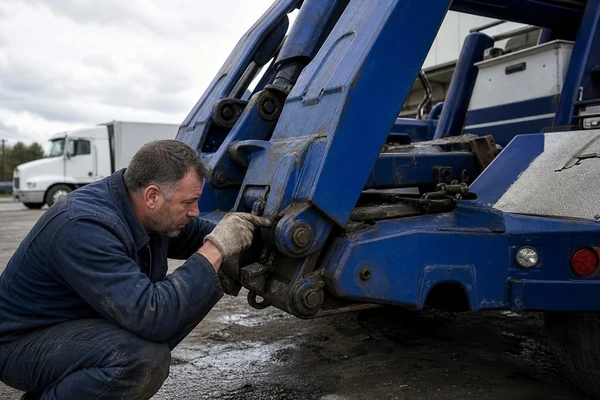
If your primary clients are local businesses (box trucks, vans, loaded pickups, etc) a medium-duty wrecker may be in order. Larger vehicles can put even light-duty wreckers with high hook ratings outside of their element so it’s important to know exactly what kind of work you’ll be using the wrecker for. Inspect the tires, frame, axle, suspension, brakes, etc of any medium-duty wrecker you’re considering and make sure the hydraulics, outriggers, boom and wheel-lift all operate smoothly. The last thing you want is to find out after purchasing a used medium-duty wrecker that it’s going to need a slew of expensive repairs (hydraulics, brakes, suspension, etc).
Paperwork and Final Checks
Of course no matter what kind of tow truck you decide to purchase don’t forget about the importance of making sure all the proper paperwork is in order before you hand over any money. This is especially true if you plan on putting down a deposit and financing the rest of the purchase. Before you go shopping for a used tow truck it’s a good idea to have a binder/folder prepared that contains the following documents/information:
- Proof of insurance (or information on what kind of insurance will be required)
- Any business licenses/tax information that may be required by your lender
- List of drivers (and any special towing/commercial drivers licenses they may need)
- Title/bill of sale/lien release paperwork (make sure the VIN# matches up on all documents!)
- Information on how/where the truck will be dispatched/parked/stored, etc
Bottom Line
Of course there’s no such thing as a perfect used tow truck (at least not at a reasonable price!). But as long as the truck you choose can adequately perform the duties you need it to do, fits properly in your storage lot, comes with all the proper paperwork and doesn’t require a host of immediate or expensive repairs, you should be good to go! Just make sure to write down a list of all the components/systems you absolutely need to be in working order and test each one out before handing over any cash!
